
 By
By 
In much of the country, pest control is a summer job. Clermont doesn’t get that break. Summers here climb toward ninety degrees, winters rarely drop below the low fifties, and the city gets about fifty inches of rain a year, so something is always active. The pest changes with the season, but the weather and the landscape keep giving them a way in. That’s why good Clermont exterminator services follow the seasons, treating for what’s active at the time before it takes hold indoors.
A Different Pest for Every Season
Seasonal changes in Clermont don’t quiet the pests down. They just change which one is the main concern.
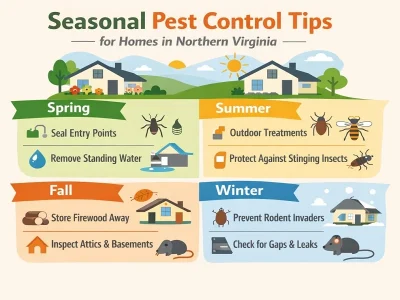
- Spring brings the termite swarms. Once the warm rains start, subterranean termites send out winged swarmers, mostly from late February into May, looking to start new colonies near foundations.
- Summer belongs to mosquitoes and ants. The June-through-September rainy season is Clermont’s wettest stretch. It fills every low spot and feeds mosquito breeding, and it drives ants indoors looking for moisture in the heat.
- Fall moves the pressure up high. As the nights cool, roof rats begin working their way toward warm attics, and that keeps up through the drier months.
- Winter pushes roaches and rodents in. Even a mild Clermont winter is cooler than a heated house, so roaches and rodents head inside for shelter.
Something is always active. The calendar just decides which pest is at the door.
How Clermont’s Landscape Influences Pest Activity
Clermont’s geography adds to what the weather already brings. The city runs along the shore of Lake Minneola at the head of the Clermont Chain of Lakes, so lake moisture and marshy edges feed mosquitoes and other water-loving pests through much of the year. Many neighborhoods also have retention ponds and drainage areas built to handle the heavy rain. Once that water sits still for a few days, mosquitoes breed in it.
The ground and the trees play a part too. The sandy soil around South Lake County holds moisture for subterranean termites when irrigation, rain, or a damp foundation keep it wet near a home. And where mature oaks grow close to a house, their limbs give roof rats an easy path to the attic. The homes themselves vary, from older properties with worn seals and aging trim to newer ones with dense landscaping and irrigation right against the foundation.
How Regular Service Tracks Seasonal Changes
A pest problem is usually easier to stay on top of when the service watches the seasons, not just the pests already inside the house. A recurring plan follows that calendar, so the treatment matches whatever is active at the time. Regular visits also let a technician catch changes at the property, like termite signs after the spring swarms or the gaps that draw rodents in once it cools. Each visit builds on the last one.
A plan like that works better when the person running it knows the area. Avata handles Clermont pest control all year, timing each visit around what the season brings, the termite swarms, the mosquito surges off the lake, the rodents heading indoors as it cools.
What You Can Do Through the Year
A good service covers most of it. A few things through the year help on your end:
- In spring, watch for discarded termite wings near windows and keep mulch pulled back from the foundation.
- In summer, remove standing water after the afternoon storms and keep the gutters clear so mosquitoes have fewer places to breed.
- In fall, trim tree limbs off the roofline and check the soffits and vents where roof rats climb in.
- In winter, seal the gaps around doors, pipes, and utility lines that let roaches and rodents inside.
No two seasons in Clermont bring the same pests. A consistent schedule keeps a home covered as the weather changes what’s at the door, so a problem gets handled before it grows.






Comments