
 By
A staircase renovation is one of the most visible improvements a homeowner can make, and the majority of UK staircases can be transformed with solid oak components without a full structural rebuild. The existing carriage typically remains sound for the life of the property; it is the surface elements that age, wear, and date the staircase.
Replacing or cladding those elements with solid oak produces a result that looks and feels entirely new, adds lasting character to the hallway, and increases the perceived quality of the property as a whole. This guide covers the key components involved, how to specify them correctly, and what to check before ordering.
Starting With the Structure
Before ordering any oak stair parts, the existing staircase should be assessed for structural soundness. Walk each tread individually and note any flex or creak. Check each newel post for movement at the base. Inspect the strings for any damage or splitting. None of these issues prevents a renovation, but each must be addressed before oak surface components are installed over them. A loose tread secured with additional screws from below, a newel post re-fixed to the floor structure, or a cracked riser replaced all take a few minutes and prevent problems from being locked in permanently under the new finish.
The Four Principal Components
A staircase renovation with oak typically involves four component types, which can be addressed individually or as a complete scheme depending on the condition of the existing staircase and the budget available:
- Tread and riser cladding: solid oak overlay sections bonded over existing softwood treads and risers; the most impactful single change in any staircase renovation and the one that transforms the appearance most dramatically
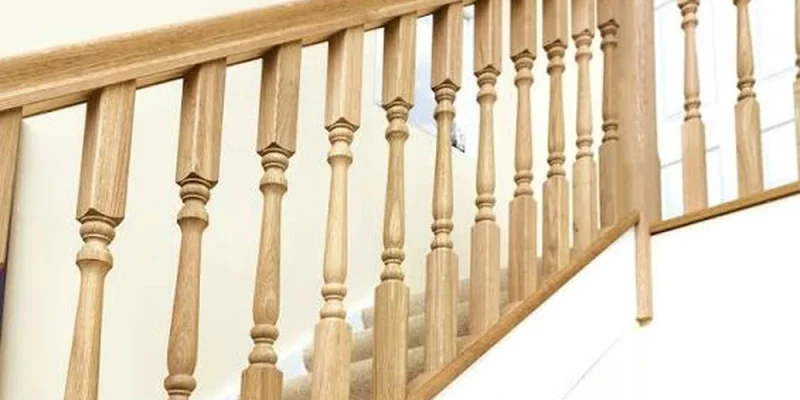
- Spindles: the vertical balustrade infill elements available in square, stop chamfered, and turned profiles; replacing dated or damaged spindles refreshes the character of the balustrade entirely
- Handrail and baserail: the top and bottom horizontal rails that carry the spindles; the handrail groove must match the spindle section size exactly before ordering
- Newel posts and caps: the structural anchor posts at the top, bottom, and any landing turns; replacing caps and refinishing existing sound posts is often sufficient where the posts themselves are structurally adequate
A comprehensive range of solid oak stair parts covering all four component types in American white oak is available from UK specialists, with prime and rustic grades and standard section sizes stocked for immediate delivery.
Specifying Spindles and Handrails Together
The single most common ordering error in staircase renovation is specifying spindles and a handrail from different sources without confirming groove compatibility. The groove in the underside of the handrail must match the cross-sectional size of the spindles: a 41mm groove handrail cannot accept 32mm spindles and vice versa. Before ordering either component, confirm the spindle section size and select the handrail groove specification to match. Where replacing both simultaneously, selecting from the same manufacturer’s matched range eliminates the compatibility risk entirely.
Building regulations also require that the gaps between spindles do not allow a 100mm sphere to pass through, which limits the maximum centre spacing and determines how many spindles are needed per tread. This applies to replacement work as well as new installations and should be calculated before ordering spindle quantities.
Matching Oak Stair Parts to the Hallway Floor
A staircase that is visible from the hallway reads best when the tread cladding species, grade, and finish matches the hallway floor. American white oak in the same grade used for both the treads and the floor, finished with the same product, produces a continuous visual flow from the entrance through to the upper floor that is one of the most satisfying results available in a hallway renovation. Order samples of both the flooring and the stair tread cladding and apply the intended finish to each before committing to a volume order; the finish type affects the final colour considerably and confirming the match in situ avoids the most common source of disappointment in this type of project.
Frequently Asked Questions
Do I need building regulations approval to replace staircase spindles?
Replacing spindles on a like for like basis generally does not require approval, but the replacement spacing must comply with the 100mm sphere rule under current building regulations regardless of what the original installation used.
Can oak tread cladding be laid over carpet stairs?
No; all carpet, gripper rods, and tacks must be fully removed and the softwood tread surface confirmed as flat and structurally sound before any oak cladding is bonded over it.
What section size spindles do most UK domestic staircases use?
41mm is the standard section size for the majority of UK domestic staircase balustrades; 32mm is used in some narrower configurations and specific stair kit systems, so confirming the existing or planned handrail groove width before ordering is always advisable.
How long does a staircase renovation with oak components take?
A full renovation covering tread cladding, riser covers, spindle replacement, and handrail on a standard domestic flight typically takes two to four days for an experienced fitter, excluding adhesive curing time and finishing.
Final Thoughts
A staircase renovation with solid oak components produces one of the most consistently impressive results available in UK home improvement, combining visual impact with lasting material quality at a fraction of the cost and disruption of a full structural replacement. Getting the specification right means assessing the existing structure honestly, confirming groove compatibility between spindles and handrails, and matching the tread species and finish to the hallway floor.
Specialist suppliers of solid oak stair parts and oak staircase components carry the full product range needed to complete any staircase renovation from individual components to complete matched schemes.






Comments