
 By
By 
Drive south out of Wilkes-Barre on Route 309 and climb toward Mountain Top, and the weather changes in about fifteen minutes. The fog that settled over the Susquehanna thins out. In January the snowbanks get taller, the wind starts pushing on the car, and the thermometer drops a few degrees. Two houses built in the same year, one on the valley floor and one up on the plateau, will not wear out the same way. They face different weather, and they were usually built in different eras too.
Roofers who work at both elevations learn this quickly. Black Label Builders operates out of Mountain Top and covers roof replacement, repair, metal roofing and storm restoration from Wilkes-Barre up through Scranton and the wider Northeastern Pennsylvania area, and homeowners can start with a free inspection. A crew that goes from a slate double block in the city to a newer colonial on the mountain in the same week sees that a single checklist misses half the story.
For homeowners, where the house sits often decides which part of the roof gives out first. Here is how that plays out.
Down by the River, Moisture Does the Slow Work
The Wyoming Valley is a long bowl, and moisture collects in bowls. Morning fog off the river, humid summers and tightly packed streets keep many valley roofs damp for hours after sunrise. On narrow lots in South Wilkes-Barre, Plymouth or Scranton’s older neighborhoods, the house next door can shade a roof face for most of the day. Moss and dark algae streaks show up first on those north and shaded slopes. They hold water against the shingles and wear down the granules faster than sun alone would.
The housing stock adds to this. Much of the valley was built for coal workers and their families, so you see double blocks, narrow two and a half story homes, and Victorians with steep slopes and dormers. Many still have slate, sometimes under a later layer of asphalt. Slate itself can last a very long time. What fails first are the copper or galvanized nails holding it, the flashing around chimneys that no longer serve a furnace, and the built-in box gutters hidden inside the cornice. When a box gutter lining fails, water runs into the wall cavity, and the stain usually appears on an interior ceiling well before anyone looks up at the roof.
Then there is the ground itself. Large parts of Luzerne and Lackawanna counties sit over old mine workings, and settling below can shift a house above. Pennsylvania runs a state mine subsidence insurance program for this reason. A ridge line that develops a dip, a chimney that pulls away from the roof, or step flashing that opens up for no clear reason can all point to movement in the structure rather than a bad roofing job. A good inspector notes this and asks the homeowner whether they have ever looked into subsidence coverage.
Up on the Plateau, Wind and Snow Take Over
Climb roughly a thousand feet to Mountain Top, Bear Creek, the Back Mountain or the ridges above Scranton, and the problems change. Snow arrives earlier, stays longer and piles deeper. Open subdivisions built in the last few decades often have few mature trees, so wind hits the roof directly.
Wind damage on the mountain tends to start at the edges. Ridge caps, rake edges and the first course of shingles at the eaves take the most uplift. Once a shingle’s seal breaks, it flaps in every storm until it creases and tears off. A homeowner may find one or two shingles in the yard and assume the rest of the roof is fine, when a whole row along the ridge is already loose.
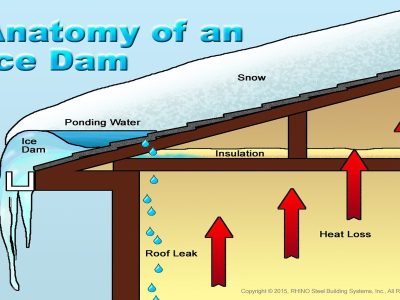
Ice dams are the other mountain problem. Heat escaping from a poorly insulated attic melts snow on the upper roof, the water runs down to the cold overhang, and it refreezes into a ridge of ice that backs meltwater under the shingles. Newer homes with cathedral ceilings, recessed lights and complicated rooflines with many valleys are especially prone to this. Detached garages and post frame outbuildings deal with plain snow weight, particularly on low pitched sections where snow sits instead of sliding off.
Clues Worth Reading From the Ground
You don’t need a ladder to spot early warning signs. A pair of binoculars and a walk around the house after a storm will show a lot.
- Dark streaks or green patches concentrated on one side of the roof usually mean moisture is lingering there, which is more common in shaded valley yards.
- Granules piling up at downspout exits suggest the shingles are aging faster than expected.
- Shingles missing along the ridge or rake edges point to wind, which is the typical mountain pattern.
- Icicles hanging from the middle of a roof span, not just the gutters, often mean warm air is leaking into the attic.
- A sagging ridge or a chimney that seems to lean away from the house calls for a structural look before any roofing work begins.
- Water stains on upper floor ceilings near exterior walls in an older valley home often trace back to a failed box gutter.
Matching the Material to the Setting
The right fix depends on the elevation as much as on the budget. On older valley homes with sound slate, repairing flashing, replacing broken pieces and relining box gutters is usually smarter than tearing off a roof that may have decades left. Where asphalt is the better choice, algae resistant shingles and a properly ventilated attic help the roof dry out between damp spells.
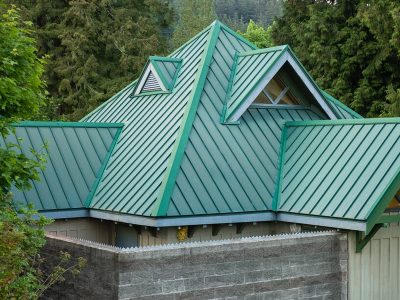
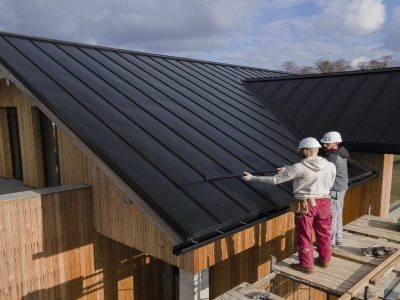
On the mountain, standing seam metal has gained popularity because it sheds snow and resists wind uplift well. It does need snow guards above entryways, decks and driveways so a winter’s worth of snow doesn’t slide off all at once onto someone. Shingle roofs up high benefit from high wind rated products, sealed starter strips at every edge, and generous ice and water membrane along the eaves and in the valleys. Whatever goes on top, attic insulation and ventilation decide whether ice dams return, so that work belongs in the same conversation as the roof.
Planning Around a Short Season
Northeastern Pennsylvania doesn’t give roofers a long, easy working window, and the window on the plateau is shorter. Asphalt shingles need warm sun to activate their adhesive strips. A roof installed in late November on the mountain may not fully seal until spring, which leaves it exposed to the first hard wind of winter. Booking replacements for late spring through early fall avoids that risk.
A sensible routine for most homes in the region looks like this.
- Walk the property after the snow melts and note anything the winter loosened.
- Schedule a professional inspection in spring while there is still time to plan.
- Handle repairs or replacement during the warm months when materials install properly.
- Clear gutters and check attic ventilation in fall before the first freeze.
- After any summer thunderstorm with strong gusts or hail, photograph the roof before calling the insurer.
Valley roofs and mountain roofs are built to do the same job. They just fail in different places and for different reasons, and knowing which kind of roof you have makes it much easier to catch problems early and choose the right materials.






Comments