
 By
By 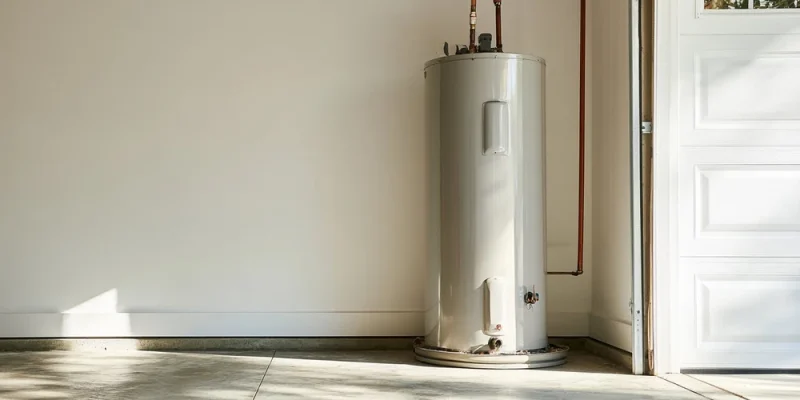
On most of the Coachella Valley’s hottest afternoons, the warmest room in the house is the one where the water heater lives. In much of the country that would be a drawback. In the desert it changes which type of replacement makes the most sense, and many homeowners don’t realize this until the old tank is already leaking onto the garage floor.
Anyone looking into Palm Dessert water heater replacement usually starts with the price of a new tank. A better first question is what kind of unit the garage, gas line and electrical panel can support. Apple J Plumbing, a C-36 licensed contractor on Joni Drive whose crews do service calls and new construction across the valley, handles this decision regularly. The rest of this article explains how it works, so you can go into that conversation knowing the options.
Reading the Clues Before the Tank Fails
Most tank water heaters give some warning before they quit, and in the desert that warning tends to come early. Valley water comes from groundwater carrying calcium and magnesium. Combine those minerals with garage temperatures that can stay above 100 degrees for weeks, and the inside of a tank wears out faster than the 10 to 12 year life printed in the brochure. Many local tanks reach eight or nine years before trouble starts.
Signs that a tank is close to the end:
- Rust-tinted water from the hot tap only, which suggests the inner lining of the tank is corroding.
- A popping or rumbling sound while the burner runs, caused by a thick layer of sediment that has hardened at the bottom.
- Moisture or a mineral crust around the base, or water dripping from the bottom seam.
- Hot water that runs out noticeably sooner than it used to, because sediment has filled space that used to hold water.
You can work out a tank’s age from the serial number on its label. Most manufacturers encode the year and month in the first few characters, and each brand’s decoding chart is easy to find online. If a tank in a Palm Desert garage is past ten years old, plan the replacement now. Doing it on your own schedule is easier than dealing with a leak on a holiday weekend.
Three Ways to Make Hot Water in the Desert
Replacing a heater used to mean installing the same model again. Today there are three realistic options, and the desert climate pushes each one in a different direction.
The familiar gas tank. A gas tank of the same size fits the existing gas line, vent and floor space, so the job takes the least time and usually costs the least upfront. The drawbacks are the ones that wore out the old tank. Sediment builds up again, the anode rod corrodes, and standby losses continue around the clock. A good water softener or a yearly flush slows the wear. A gas tank remains a sensible choice for a home that already has a gas line and an owner who wants a quick swap.
Tankless gas. A tankless unit heats water only when a tap is open, so it never runs out and takes up very little room. The installation is more involved. These units often need a larger gas line than a tank did, along with new venting and a dedicated condensate drain on condensing models. Hard water causes problems here too, because scale coats the narrow passages in the heat exchanger. In the Coachella Valley, plan on descaling a tankless unit at least once a year, or more often if the home has no softener.
The heat pump water heater. This is the option that suits the desert well. A heat pump water heater does not burn fuel or heat water with an element. It pulls heat out of the surrounding air and moves it into the tank, which works best when that air is warm. A garage that sits at 105 degrees in July is a very good setting for it. The unit also releases cool, dry air while it runs, so the garage feels slightly cooler as a side benefit. The U.S. Department of Energy’s guide to heat pump water heaters estimates they can use two to three times less energy than standard electric models.
What a Heat Pump Needs That a Gas Tank Doesn’t
Heat pump water heaters have requirements of their own. They need a fair amount of surrounding air to draw heat from, which is rarely a problem in a garage but can be in a small closet. They produce condensation that has to drain somewhere. Many full-size models need a 240 volt circuit. Newer 120 volt plug-in models can sometimes use an ordinary outlet nearby, though they recover heat more slowly. The compressor makes a steady hum about as loud as a refrigerator, which rarely bothers anyone when the unit is in the garage.
They also cost more upfront. Federal tax credits and California rebate programs have reduced that gap for many households, but the amounts and eligibility rules change often. Check what is available for your address before you buy.
The Parts of the Job You Don’t See in the Box
The water heater is only part of the replacement. California treats this work as a permitted job, and an inspector will look at several items that people tend to forget:
- Seismic strapping, with two straps fastened to the wall framing, one in the upper third of the tank and one in the lower third. The valley sits near the San Andreas Fault, so the inspector takes this seriously.
- A thermal expansion tank wherever the home has a pressure regulator or a check valve on the main line. Without one, heated water has no space to expand.
- A temperature and pressure relief valve with a discharge line routed to an approved location, not cut off a few inches above the floor.
- Correct venting and combustion air for any gas unit. Carbon monoxide safety depends on this.
- A drain pan and an elevated platform where the location or local code requires them.
This is also the right time to replace the brittle gas connector and the old water supply lines, and to install new shutoff valves. Those parts are cheap, and an old fitting attached to a brand-new heater is a common source of leaks.
Sizing for How the House Actually Lives
Desert households use hot water in unusual ways. Many homes are full in winter with visiting family and snowbird guests, then nearly empty from June through September. A tank sized for a crowded February runs mostly idle all summer, while a tank sized for summer leaves guests with cold showers at Christmas.
The water entering the house also changes with the seasons. In summer, cold water from the mains can arrive close to lukewarm, so any heater has less work to do. In winter the incoming water is noticeably colder, and recovery time matters again. Both should factor into sizing. A tank’s first-hour rating, and a tankless unit’s flow rate at a winter temperature rise, give a better estimate than gallon capacity alone.
The right replacement depends on the house, from the size of the gas line to the amount of space around the heater and the months when every bedroom is full. Taking a few minutes to compare these points before the old tank gives out usually leads to a heater that suits the home and lasts longer.






Comments