
 By
By 
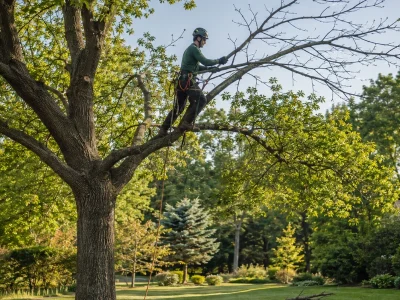
A mature tree changes the garden beyond the area covered by its branches. Its roots explore a wide volume of soil, its canopy redirects rain, and its shade moves with both the sun and the seasons. A nearby open patch is not necessarily an unoccupied site.
Fruit trees introduced into that zone face two kinds of competition. The visible competition is for light and working room. The less obvious competition is for water, nutrients, and soil volume, especially during spring growth and dry summer weather.
The answer is not always to avoid mature trees completely. Their shelter, height, and established presence can help shape a productive garden. Success depends on reading distance, aspect, species, root conditions, and the future size of both canopies rather than treating shade as the only issue.
This is a site-planning problem with a long horizon. A young fruit tree should be positioned for the garden that exists now and for the larger canopy relationship that develops over the next decade.
The empty-looking ground beside a mature tree often holds active roots and receives less rainfall than expected. A nursery specialist from ChrisBowers says that gardeners should map both shadow and soil moisture before choosing the new position. The nursery recommends watching the site in spring and summer, checking how far the existing canopy throws rain, and testing several possible points rather than digging beside the first clear patch. Distance should protect future branch room as well as current light. Rootstock and tree form then help match the new planting to the available scale, but they do not remove the need for water and open soil. The specialist also advises against trenching through major roots or concentrating irrigation against the trunk of the mature tree. A better position gives the newcomer its own manageable root zone while preserving the health and structure of the established tree that already defines the garden.
Mature trees create gradients rather than a simple line between shade and sun. Light increases gradually beyond the canopy, rain reaches the ground unevenly, and root density varies with soil, species, obstacles, and past management. Several small observations therefore give a more reliable picture than one measurement at noon.
The six sections separate those gradients into decisions. Seasonal light comes first, followed by roots and water, canopy distance, scale, irrigation, and the possibility that another position is simply better. The final option matters because a new tree should not begin with compromises that no amount of routine care fully removes.
Map Light Beyond a Single Summer Day
Shade changes with leaf cover, sun angle, and the height of nearby branches; the task remains repeatable during a busy week, when good access and a clear question matter most.
A simple seasonal sketch reveals which area receives dependable useful light; the choice gains a defined purpose instead of leaving appearance or habit as the only measure of success.
The garden is better served when gardeners observe morning and afternoon light across spring and summer before fixing the position; the gardener is then able to note what changes, what remains stable, and which observation justifies the next action.
The avoidable risk comes from judging the site during winter leaflessness or one bright midday visit; the long-term test is whether the arrangement still works when the season, crop, and household routine become busier.
Use a familiar garden route as the observation point; regular passing makes subtle changes easier to notice and connects follow-up work to daily life, while the original purpose of the work stays clear.
Low British sun creates long shadows even where summer light appears generous; this turns a general instruction into a condition that can be checked after ordinary weather and garden use.
The household test is straightforward: the plant should remain reachable, the expected crop should have a use, and necessary care should fit the months when the garden is busiest rather than only an ideal weekend, while nearby planting and access continue to evolve.
The fruit tree gains a position based on the growing season rather than a snapshot; the point stays connected to the plant’s response and to the practical limits of the surrounding garden.
Recognise Root Competition and Rain Shadow
Dry ground beneath a canopy often reflects interception and established root demand together; the decision takes a realistic place in a productive British garden instead of becoming a one-day task.
Evidence should simplify the next decision; if observation only adds uncertainty, the gardener needs a clearer question before another intervention, and later comparisons begin from a known baseline.
Later correction becomes likely after assuming a bare surface means unused soil; a second look after rain, wind, or fresh growth often reveals more than the first inspection.
A gardener should distinguish the permanent decision from the seasonal response; position, scale, and soil preparation deserve long horizons, while watering, protection, and small corrections remain responsive to current conditions, without assuming that next season will repeat this one.
A measured response is to test soil moisture at several distances after rain and during a dry period; the value lies in preserving options while roots, growth, or soil response provide better evidence.
Light rain may never penetrate dense foliage, while large roots draw moisture from a wide area; small timely corrections protect earlier work and avoid disturbing an established plant later.
Mulch and watering help only when the chosen point has a workable root zone; a useful result stays visible through steadier growth, workable soil, or simpler routine care.
The new tree is not placed where permanent competition overwhelms routine care; the approach supports the whole planting instead of solving one narrow problem and creating another.
Leave Room for Two Future Canopies
Today’s gap shrinks as the young tree develops and the mature tree continues to spread; the point stays connected to the plant’s response and to the practical limits of the surrounding garden.
The practical course is to project branch height, width, pruning access, and the route of prevailing wind between both trees; the task remains repeatable during a busy week, when good access and a clear question matter most.
The weak point in this plan is measuring only trunk-to-trunk distance; the gardener is then able to note what changes, what remains stable, and which observation justifies the next action.
Storm movement and wet foliage increase the need for clear canopy separation; the long-term test is whether the arrangement still works when the season, crop, and household routine become busier.
Tie a review point to the next meaningful change; new growth, settling soil, a dry spell, or harvest supplies evidence without encouraging constant interference, so the plant has time to provide useful evidence.
Thoughtful spacing preserves light and safer working room; this turns a general instruction into a condition that can be checked after ordinary weather and garden use.
The final measure is not perfection, but resilience in routine conditions; a sound arrangement tolerates small delays, makes emerging problems visible, and allows the gardener to correct course without beginning the whole job again, while leaving room for ordinary household use.
Each tree keeps a recognisable shape without constant corrective pruning; the choice gains a defined purpose instead of leaving appearance or habit as the only measure of success.
Use Rootstock and Form as Planning Tools
A controlled final size helps, but it does not cancel unsuitable conditions. Where mature canopies dominate a plot, fruit trees for sale should be compared by rootstock, form, and realistic site tolerance rather than compact appearance at delivery; the approach supports the whole planting instead of solving one narrow problem and creating another.
Care starts to unravel through using a compact rootstock to justify a dark or root-filled corner; the value lies in preserving options while roots, growth, or soil response provide better evidence.
The clearest next step is to select vigour and form after the available light, soil, and access have been defined; the decision takes a realistic place in a productive British garden instead of becoming a one-day task.
Scale choices work best when the site already offers a fair foundation; small timely corrections protect earlier work and avoid disturbing an established plant later.
A successful plan leaves a useful margin for unusual weather, heavier crops, and busier weeks; that margin is not wasted space or effort, but insurance against ordinary variation that exposes an over-tight arrangement, so future care begins from a clear reference point.
Smaller UK gardens often need trained or naturally compact forms to preserve movement; a second look after rain, wind, or fresh growth often reveals more than the first inspection.
Explain the decision without relying on appearance alone; an answer that mentions roots, timing, access, and expected growth usually rests on firmer ground, so the next action follows evidence rather than habit.
The fruit tree fits the space without being asked to solve the space; a useful result stays visible through steadier growth, workable soil, or simpler routine care.
Water the New Tree Without Harming the Old
Establishment watering should reach the new root zone rather than collect around either trunk; the choice gains a defined purpose instead of leaving appearance or habit as the only measure of success.
Dry wind and intercepted summer showers create misleading surface conditions; the gardener is then able to note what changes, what remains stable, and which observation justifies the next action.
A sound plan starts when gardeners apply water slowly to the planted area and check penetration before repeating; the point stays connected to the plant’s response and to the practical limits of the surrounding garden.
Seen across a full season, the work connects preparation with observation: the initial action establishes a baseline, while later weather and growth reveal whether the choice remains suitable or needs a modest adjustment, rather than depending on a single favourable season.
Test the arrangement through access in poor weather; a visible and reachable inspection point makes useful checks far more likely to continue, with the next check tied to a visible change.
The mistake to guard against is sending frequent shallow water across competing surface roots; the task remains repeatable during a busy week, when good access and a clear question matter most.
A defined watering basin and broad mulch support targeted care; the long-term test is whether the arrangement still works when the season, crop, and household routine become busier.
The new tree receives moisture while the mature tree remains undisturbed; this turns a general instruction into a condition that can be checked after ordinary weather and garden use.
Know When a Different Position Is Wiser
Some sites remain poor after every reasonable adjustment is considered; a useful result stays visible through steadier growth, workable soil, or simpler routine care.
The decision becomes workable when gardeners compare another bed, boundary, container strategy, or trained position before committing; the approach supports the whole planting instead of solving one narrow problem and creating another.
Photographs from the same position create a simple record, revealing gradual crowding, colour change, settling, and seasonal movement that memory tends to smooth over, while avoiding intervention merely for its own sake.
British gardens often contain small microclimates within only a few metres; the value lies in preserving options while roots, growth, or soil response provide better evidence.
A second option can reduce years of compensatory watering and pruning; a second look after rain, wind, or fresh growth often reveals more than the first inspection.
An annual photograph and a few dated notes provide valuable context, linking visible change to rainfall, pruning, feeding, or harvest; over time, that record separates a temporary response from a pattern that genuinely deserves action, while nearby planting and access continue to evolve.
A misleading shortcut is choosing the nearest gap because moving the idea feels inconvenient; the decision takes a realistic place in a productive British garden instead of becoming a one-day task.
The tree starts where ordinary care is enough; small timely corrections protect earlier work and avoid disturbing an established plant later.
This final section returns to the hidden influence of mature trees on light, root competition, rain shadows, future canopy overlap, and watering decisions; the aim is an agreement between plant, site, and repeatable care that remains convincing after the first season.









Comments