
 By
By 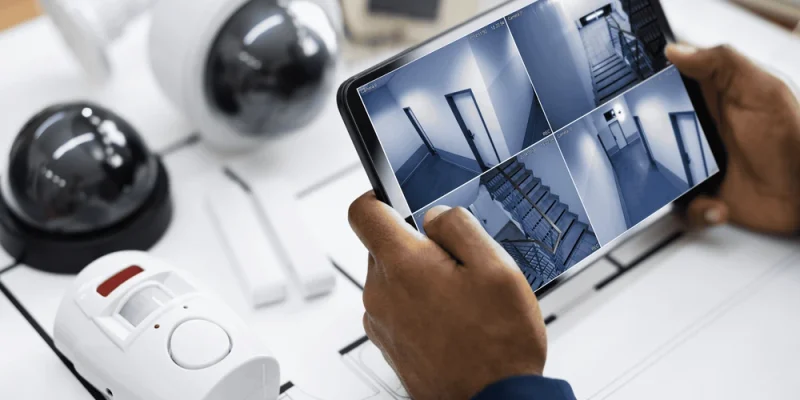
Business security often grows piece by piece. A camera gets added after one concern. A new lock appears after another. Access codes are shared as employees come and go. Before long, the company has several security measures but no clear picture of whether they work together.
A commercial security assessment provides that bigger picture.
At SafeHouse Security Consultants, we evaluate commercial properties with the goal of identifying vulnerabilities and developing recommendations tailored to the site. Our commercial security assessments are designed to help businesses protect their property, employees, and customers rather than relying on a one-size-fits-all security package.
Key Takeaways
- Commercial security should be assessed as a complete system rather than as a collection of individual devices.
- Doors, access points, lighting, cameras, procedures, and surrounding conditions should be reviewed together.
- Employee access practices can create vulnerabilities even when security technology is working correctly.
- Camera placement and coverage matter as much as the number of cameras installed.
- Independent assessments can help businesses prioritize spending around actual vulnerabilities.
- Security should be reviewed periodically as staff, facilities, and risks change.
Start With the Property Perimeter
Commercial security begins before someone reaches the front door.
We look at how people approach the building, where vehicles enter, which areas are accessible after hours, and whether there are locations with limited visibility.
Fencing, gates, loading areas, parking lots, exterior lighting, and landscaping can all affect the security of a commercial property.
The right solution depends on how the property operates. A warehouse does not have the same needs as a professional office, retail location, or multifamily property.
That is why we begin with the environment instead of immediately recommending hardware.
Review Every Entry and Access Point
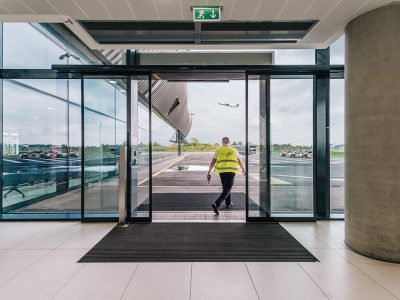
Businesses often pay close attention to the main entrance while overlooking secondary doors, delivery entrances, storage areas, rooftops, or other access points.
An assessment should consider how each entry is secured and who needs access to it.
We also look at how access is managed internally.
Who has keys? When were codes last changed? What happens when an employee leaves? Are sensitive areas accessible to people who do not need to enter them?
Technology helps, but procedures matter too.
A sophisticated access-control system can still be undermined by outdated permissions or poor day-to-day practices.
Evaluate Camera Coverage, Not Just Camera Count
Ten cameras do not automatically provide better security than five correctly positioned cameras.
Surveillance should be evaluated based on what each camera can actually see and what purpose it serves.
We look for gaps in coverage, poor viewing angles, environmental obstructions, and areas where lighting could limit useful footage.
Camera placement should also reflect the property’s highest-priority risks.
SafeHouse’s security-assessment approach specifically evaluates areas such as camera geometry, lighting, vulnerable entry points, landscaping, and perimeter conditions rather than simply recommending additional equipment.
Examine the Surrounding Area
Commercial security planning should also consider what is happening beyond the property line.
SafeHouse assessments include analysis of local crime data in addition to the on-site evaluation.
This helps us put potential vulnerabilities into context.
For example, the priorities for an office with heavy daytime foot traffic may differ from those of a business operating overnight or storing valuable inventory.
We want recommendations to reflect realistic risks rather than hypothetical ones.
Build a Prioritized Security Plan
Finding ten areas that could be improved does not necessarily mean all ten need to be addressed immediately.
A useful commercial security assessment should help a business decide what deserves attention first.
We consider the significance of each vulnerability, the practicality of improvements, existing systems, and how different measures work together.
SafeHouse’s assessments include detailed reports and tailored recommendations, and we can help manage the logistics of implementing selected security improvements afterward.
This makes the assessment a roadmap rather than simply a list of problems.
Conclusion
Commercial security works best when it is intentional.
Cameras, alarms, lighting, access control, physical barriers, and employee procedures should support one another. If they have been added independently over several years, gaps can develop without anyone noticing.
At SafeHouse Security Consultants, we provide commercial security assessments designed to identify those gaps and turn the findings into practical recommendations. We serve Greater Los Angeles County, Orange County, and surrounding areas, with both in-person and virtual assessment options available.
The best time to understand a vulnerability is before it becomes the reason you are forced to make a change.
Frequently Asked Questions
What is included in a commercial security assessment?
The exact review depends on the property, but it can include access points, perimeter conditions, lighting, surveillance, physical vulnerabilities, local crime data, and other security measures.
How often should a business conduct a security assessment?
There is no universal schedule. We recommend reassessing after significant changes such as expansion, renovation, staffing changes, new equipment, or changes in the surrounding risk environment. SafeHouse also recommends periodic check-ins after an assessment.
Is a commercial security assessment only for large businesses?
No. Security assessments can be useful for businesses of different sizes because the recommendations are based on the specific property and its risks rather than company size alone.
Can SafeHouse conduct a security assessment remotely?
Yes. SafeHouse offers virtual security assessments through live video and states that these provide the same level of detail and value as its in-person service.
Does a security assessment mean we need to replace our current system?
Not necessarily. The purpose is to determine what is working, where vulnerabilities exist, and which improvements deserve priority. In some cases, existing equipment may simply need better placement, configuration, or supporting measures.
This article was written by a professional at SafeHouse Security Consultants. SafeHouse Security Consultants’ mission was to bring peace of mind into the home. We want to remove those fears and give you and your family peace of mind and security by applying our ten years of experience protecting people and properties to your home. We can help you protect your home with home security system companies in Hollywood, and eliminate those fears so that you can concentrate on the things that matter most to you.





Comments